From June 10, 2024, through July 15, 2024, I received home health services and PICC line infusion therapy to help manage my medical needs following my diagnosis of a serious staph infection and osteomyelitis. During this time, nurses regularly came to my home to monitor my condition, provide wound care, change dressings, and assist with the management of my PICC line.
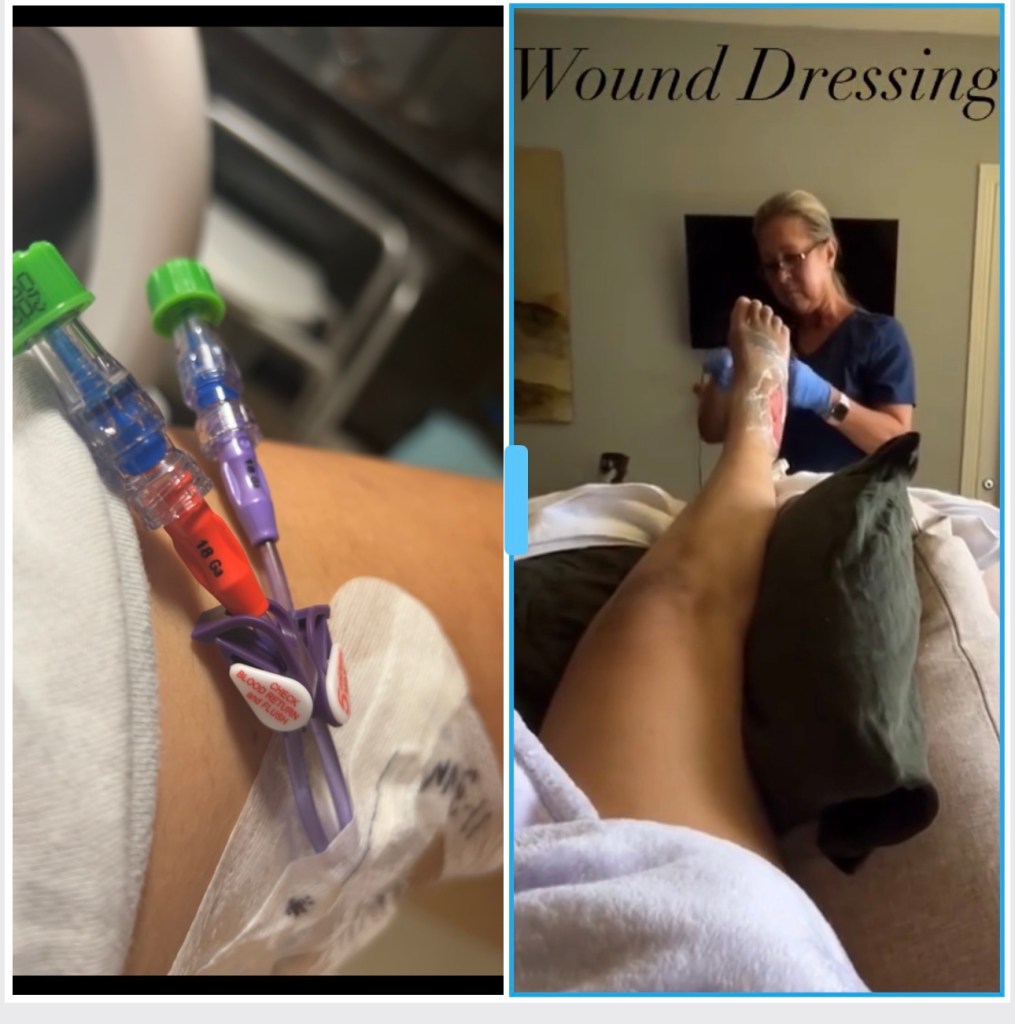
On July 15, 2024, I received treatment at Baywood Wound Clinic for a wound following my diagnosis of a staph infection and osteomyelitis. Despite ongoing symptoms and limited progress in the healing process, I do not recall receiving vascular testing or imaging studies to evaluate the underlying cause of my worsening condition.
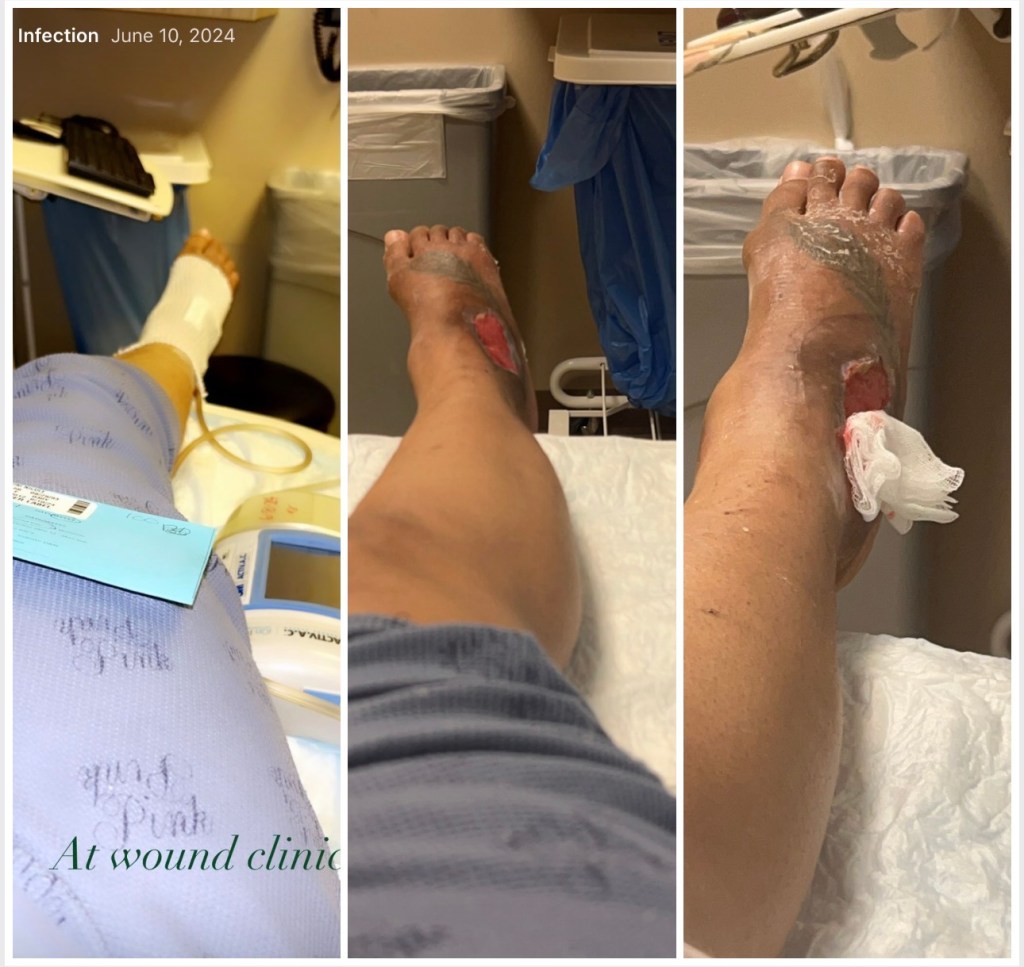
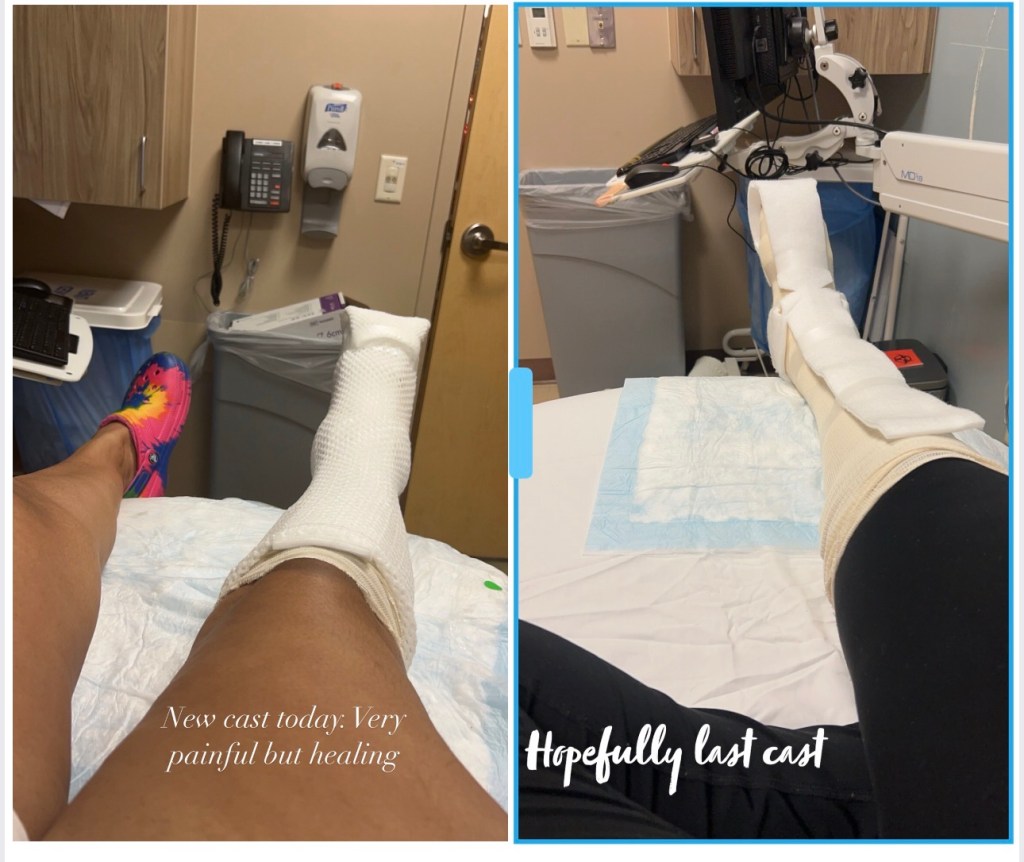
For approximately five months, I was treated in a total contact cast as part of my wound care treatment. Month after month, I continued attending weekly appointments while struggling with pain, swelling, and a wound that was taking much longer to heal than expected.
Each week, the wound specialist would remove the cast, clean and evaluate the wound, apply medication, and place multiple layers of padding and protective dressings over my foot and ankle. A new cast would then be molded to my foot and leg using warm water. During these visits, efforts were also made to gradually improve the position of my ankle. When treatment began, my ankle was fixed at approximately 10 degrees, and over time the goal was to bring it closer to a 90-degree position to improve my ability to walk.
As a patient, I always asked can we do an x-ray or do I need more imaging and the wound specialist always said that it wasn’t needed.
In October 2024, once the wound was completed healed I found out I had severely compromised blood flow to my foot and ankle by having an MRI. By that point, significant tissue damage had already occurred, and my condition had become much more serious than anyone initially realized.
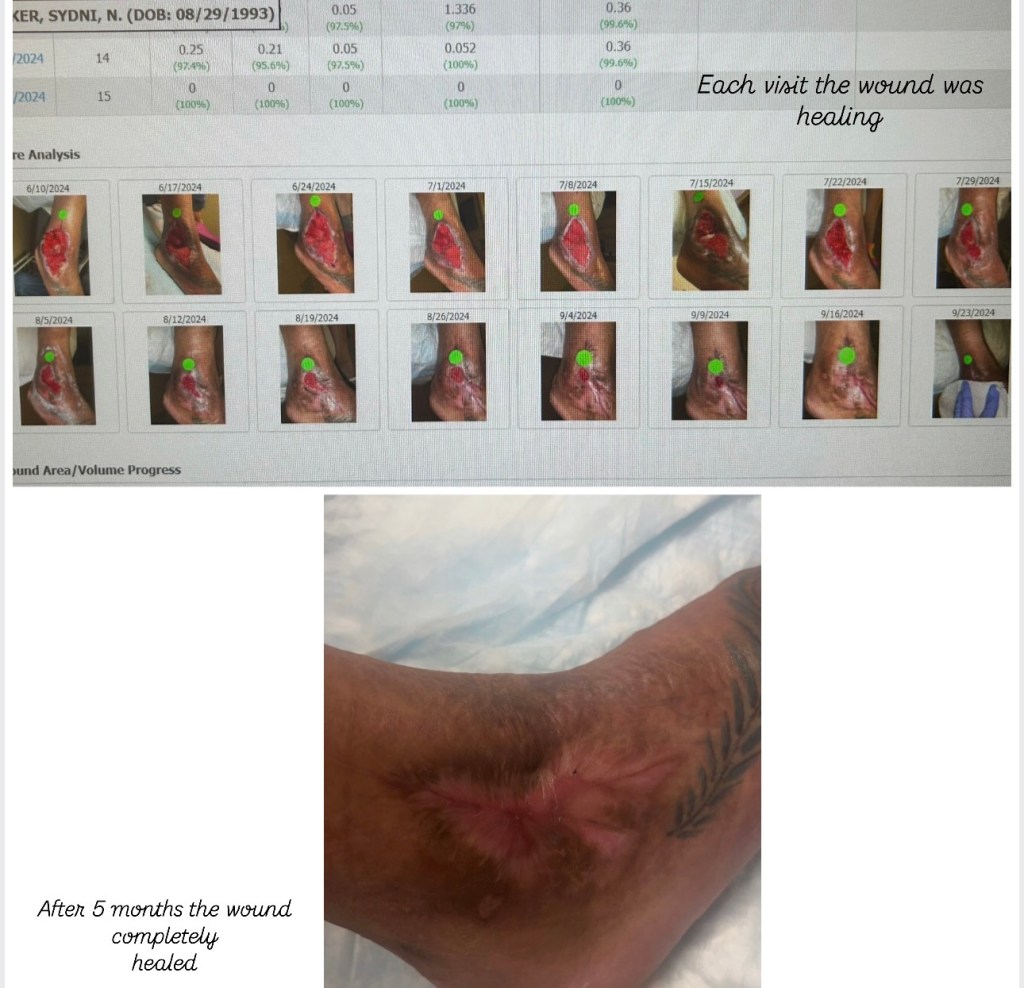
Learning that my ankle joint and ankle bone had deteriorated so severely, and that blood flow to my foot and ankle had been significantly compromised, was devastating. The MRI that revealed these findings provided answers that I had been searching for throughout my treatment.
One of the reasons this discovery was so difficult to process was that I had advocated for additional testing as my condition continued to worsen. I was ultimately able to obtain the MRI after expressing ongoing concerns and following recommendations from members of my treatment team. The results revealed the severity of the damage that had occurred within my ankle.
I continue to question whether earlier vascular testing, circulation studies, imaging, or referrals to vascular specialists could have identified problems sooner. I later learned that blood flow to my foot and ankle had become severely compromised. By the time the extent of the circulation issues was fully recognized, significant damage had already occurred.
I am sharing my story is to encourage patients with non-healing wounds to ask questions about blood flow, circulation, infection, and additional testing when their condition is not improving. A wound that is not healing may be a sign of a more serious underlying problem, and patients deserve a thorough evaluation to determine why.
 My Journey Becoming an RBK Amputee