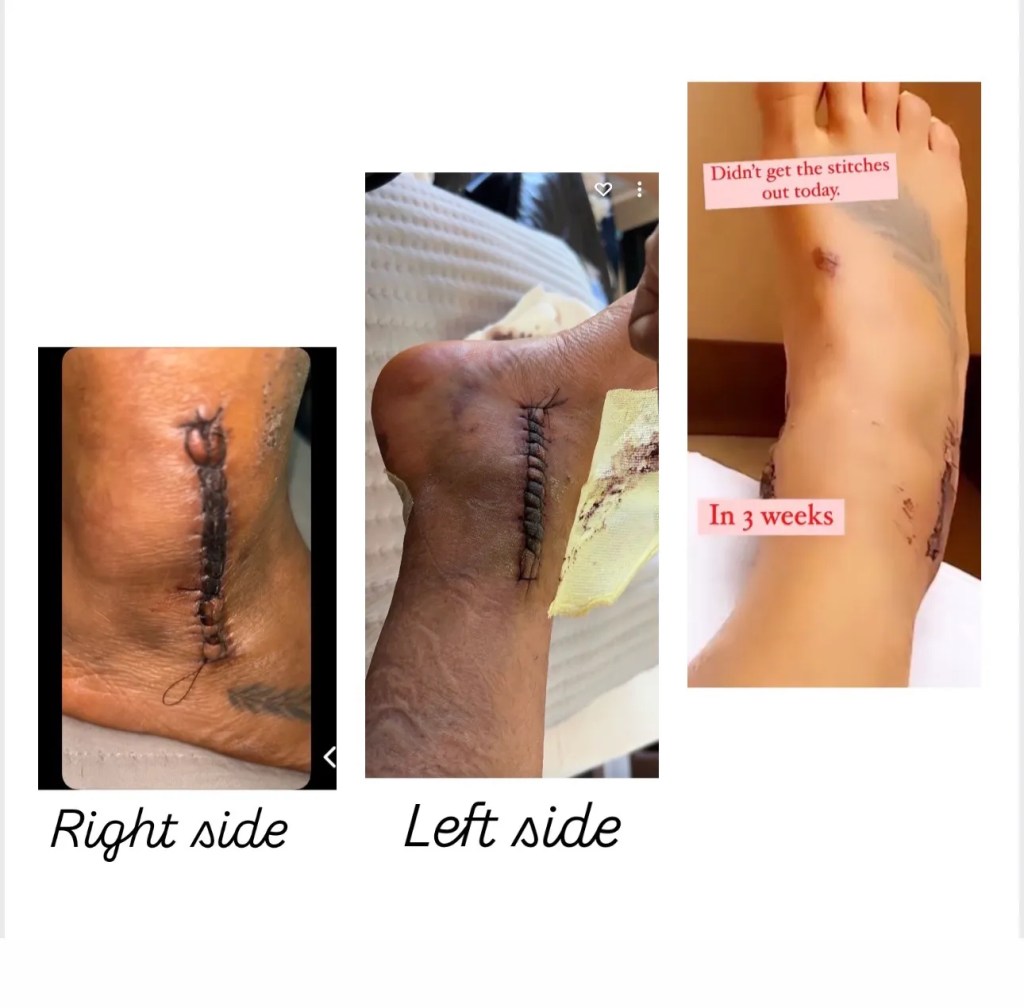
I was referred by Banner Gateway Medical Center in June 2023 to go see a Podiatrist who on July 25, 2023, preformed a right ankle surgery that included an ankle arthrotomy and tenosynovectomy at Banner Baywood Medical Center. I did have two follow up appointments to remove the stitches in September of 2023 and a week later the podiatrist scalpel off the scab from the surgical site the incision expanded at (BMG Health Clinic – Gilbert POD #206) and then he sent me to Banner Baywood Wound Clinic the same day for help. In November 2023, I returned to my podiatrist’s office to obtain a referral for physical therapy.
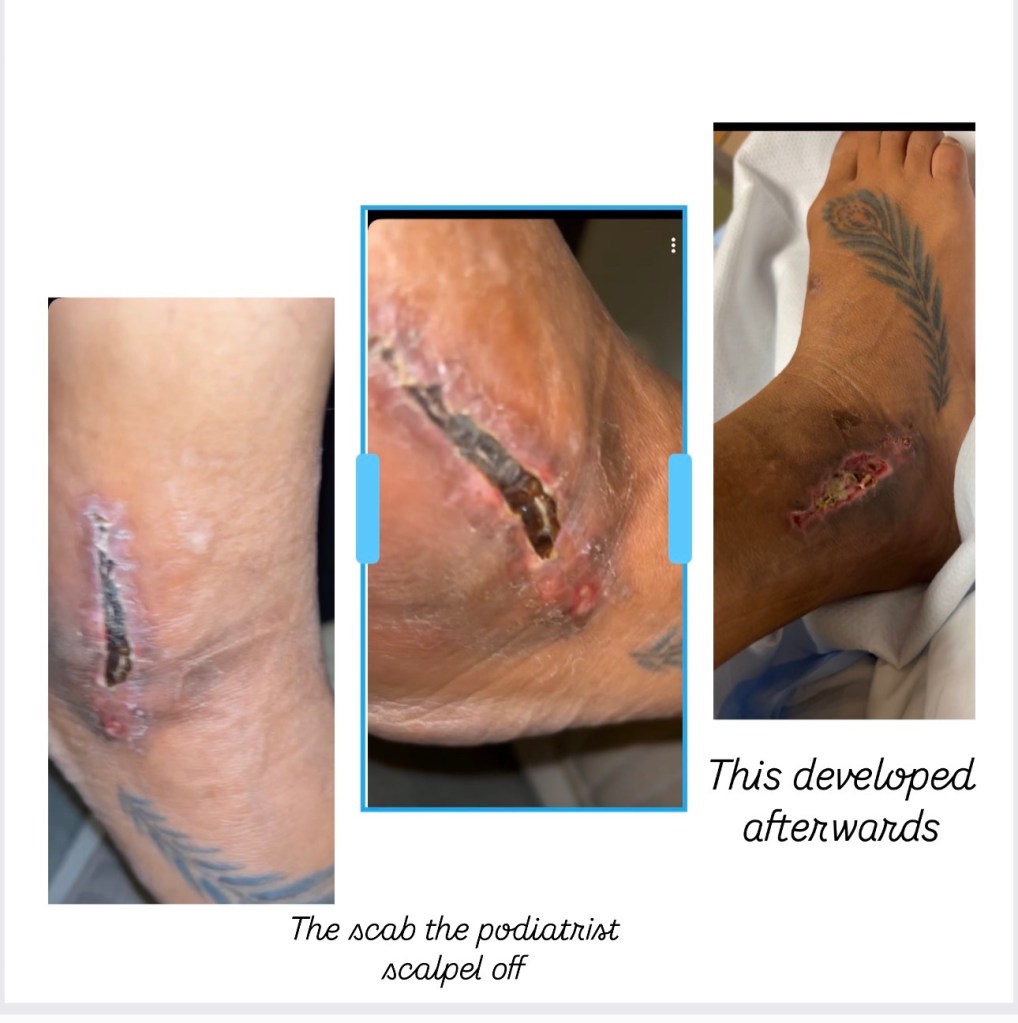
In April 2024, I began experiencing increasing pain in my ankle. What initially seemed like a setback in my recovery quickly became a growing concern as the pain worsened and was accompanied by swelling, wound complications, and a lack of healing.
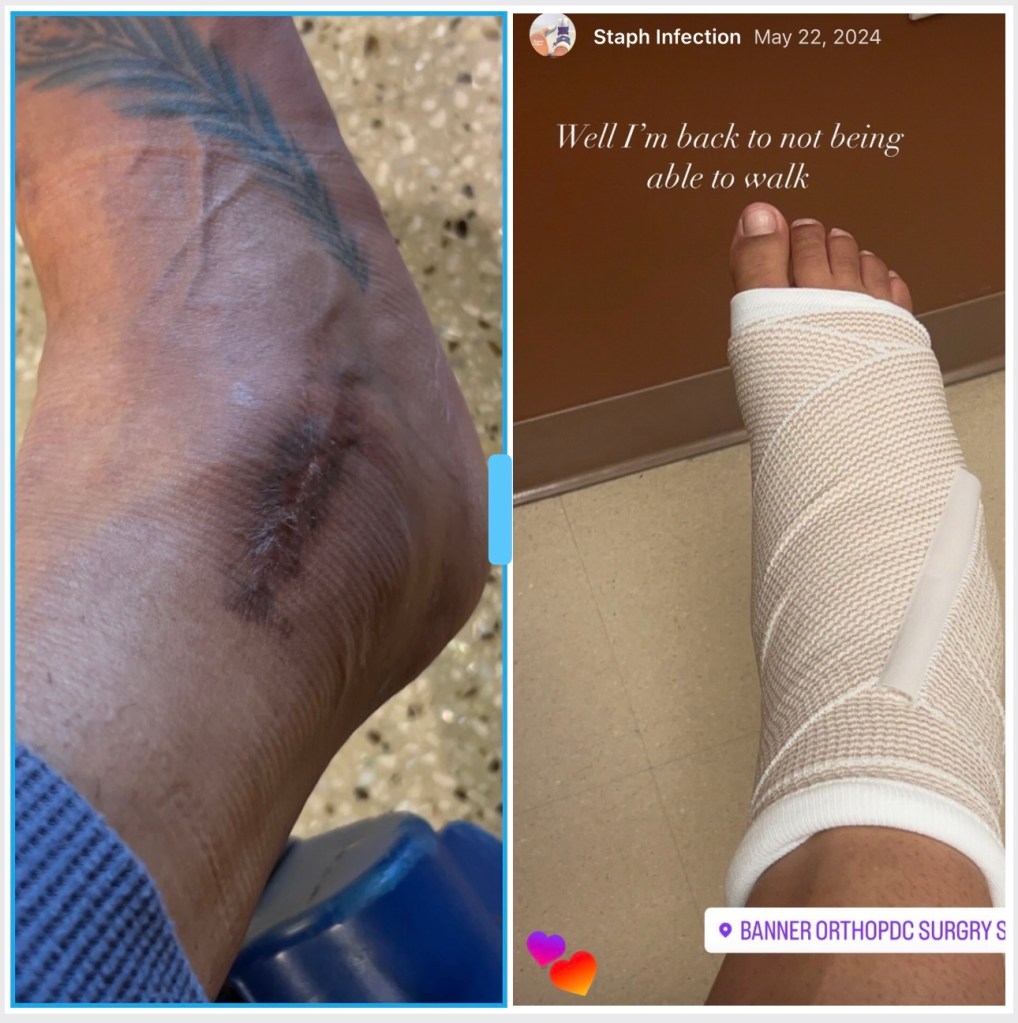
On May 22,2024, the podiatrist wrapped with an ACE bandage but I was left wondering whether additional diagnostic testing, imaging studies, laboratory work, infection screening, vascular evaluations, or referrals to other specialists should have been pursued as my condition continued to deteriorate.
I continued searching for answers about why my ankle was not healing and why my symptoms were becoming increasingly severe. The whole week of May 19, 2024 I sought help at different ER’s. Looking back, I continue to question whether earlier testing and intervention could have identified the underlying problems sooner and potentially altered the course of my treatment.
My purpose in sharing this experience is not only to tell my story, but also to raise awareness about the importance of patient advocacy, timely diagnosis, and thorough medical evaluation. Through sharing my journey, I hope to encourage patients to ask questions when symptoms are not improving, seek second opinions when necessary, and ensure that persistent pain, swelling, wounds, and signs of infection are fully investigated.
While I cannot change what happened to me, I hope my experience empowers others to advocate for themselves and become active participants in their healthcare. No patient should feel unheard when their condition continues to worsen.
Throughout my recovery and rehabilitation, I found a level of care, communication, and support that restored my confidence in the medical system. Based on my personal experience, The CORE Institute is the only podiatry and orthopedic team I trust with my care. Their commitment to my recovery helped me navigate one of the most difficult chapters of my life.
The Incompetent Podiatrist, Hospital & Wound Specialist
I went to Banner University Medical Center on May 19, 2024, seeking answers for my worsening symptoms. By that point, I was experiencing severe pain in my right ankle, significant swelling, redness, and difficulty bearing weight. Walking had become extremely difficult, and I knew something was seriously wrong.
While in the emergency department, three X-rays of my ankle were performed. I was informed that the findings were related to scar tissue and was advised to go home, ice my ankle, and continue monitoring my symptoms. However, I left the hospital feeling discouraged and concerned because my condition continued to worsen, and I still did not have answers for the pain, swelling, and loss of function I was experiencing. They misdiagnose my infection for something they couldn’t see on the x-ray
Banner University Medical Center is known for treating complex medical conditions, including infectious diseases, and I believed I would receive the specialized care needed to determine why my condition was rapidly deteriorating.
After going to the Banner University Medical Center, I went to another ER Abrazo Central Campus due to the symptoms were unbearable and they performed a CT scan and the results said that I had bone fragments from the first surgery that were missed and they also said that I may possible have an infection. They recommended me to go back to my podiatrist.
On May 26, 2024, my surgical incision suddenly broke open, and the Phoenix Fire Department transported me by ambulance to Banner University Medical Center. By this point, my condition had deteriorated significantly, and I was frightened by how quickly things were worsening.
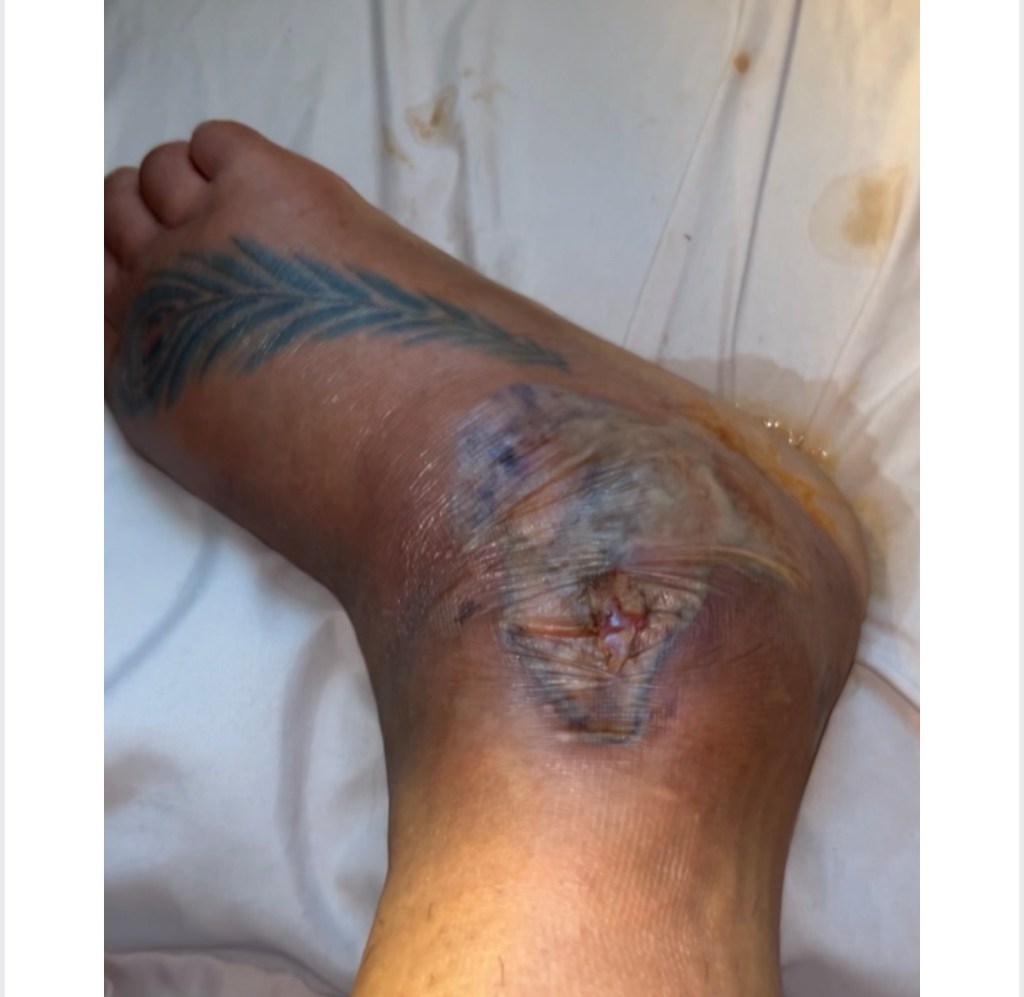
While in the emergency department, I was evaluated by a physician who expressed concern about the severity of my condition. I was told that it was a good thing I had returned to the hospital because there was now a significant risk that I could lose my leg if the infection continued to progress.
After spending most of the day in the hospital, blood cultures and additional testing were performed. The results revealed that I had developed a serious staph infection associated with my surgical incision. For the first time, I had an explanation for why my condition continued to worsen despite months of pain, swelling, wound complications, and unanswered questions.
Although it was devastating to learn that I had developed a serious infection, I also felt a sense of relief in finally having an answer. Unfortunately, the diagnosis came after the infection had already caused significant damage. What began as a work-related ankle injury had now progressed into a medical crisis that would require additional surgeries, prolonged antibiotic treatment, and an uncertain future.
I was informed that the hospital did not have a podiatrist or orthopedic surgeon available to provide the surgical treatment I required. As a result, arrangements were made for me to be medically transported to Banner Baywood Medical Center, where my podiatrist was waiting to evaluate me and perform a second ankle surgery.
On May 26, 2024, At Banner Baywood Medical Center, further testing, including an MRI, revealed findings concerning for a septic ankle joint and possible osteomyelitis, a serious bone infection. By that point, the infection had progressed beyond the incision and was affecting the structures within my ankle.
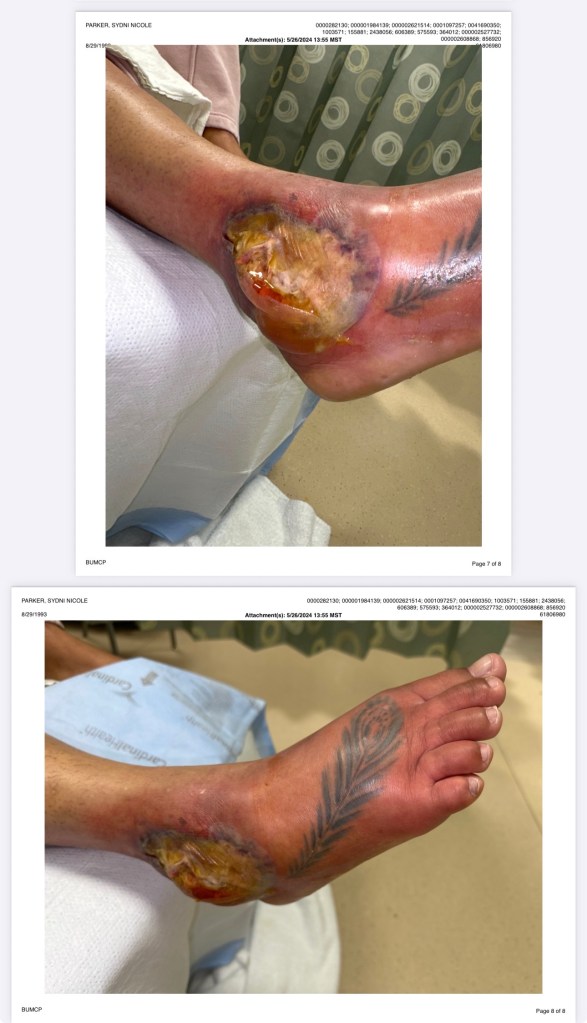
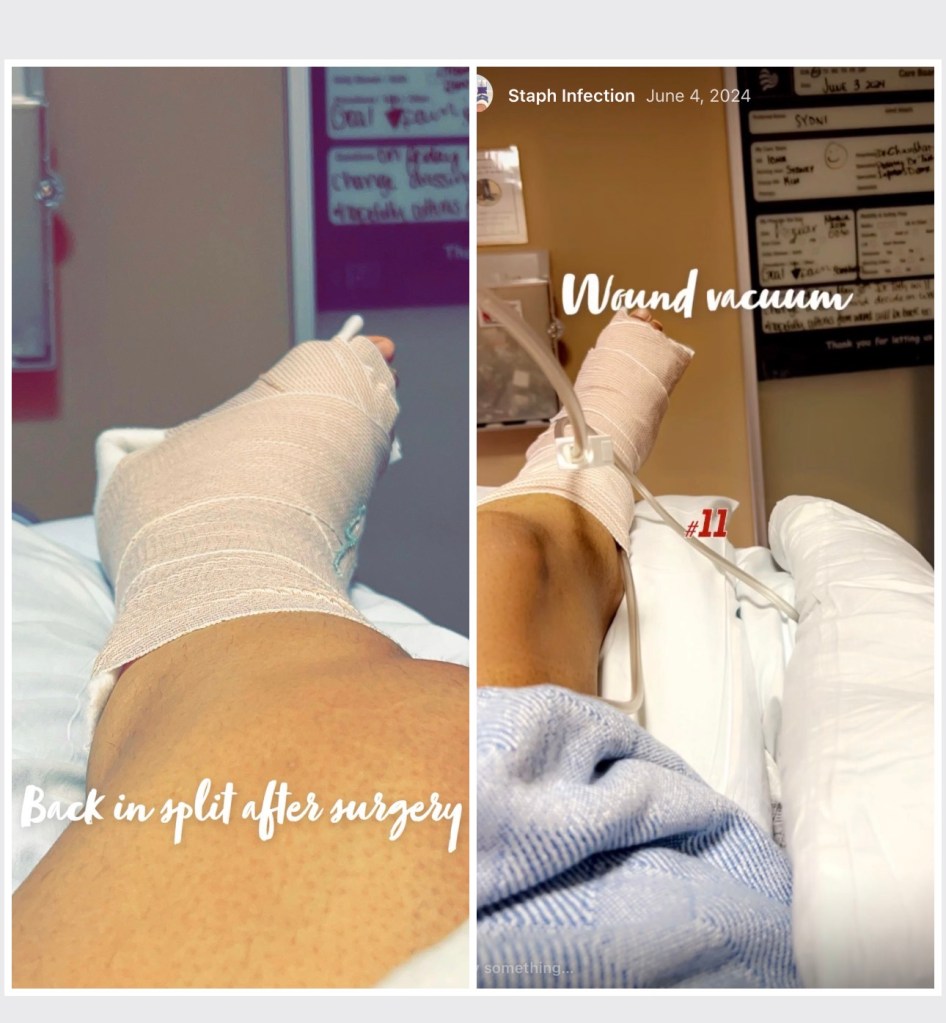
On May 28, 2024, I underwent an my 2nd ankle surgery debridement and irrigation procedure to remove infected tissue and attempt to control the infection. Following surgery, tissue samples were sent to pathology for evaluation
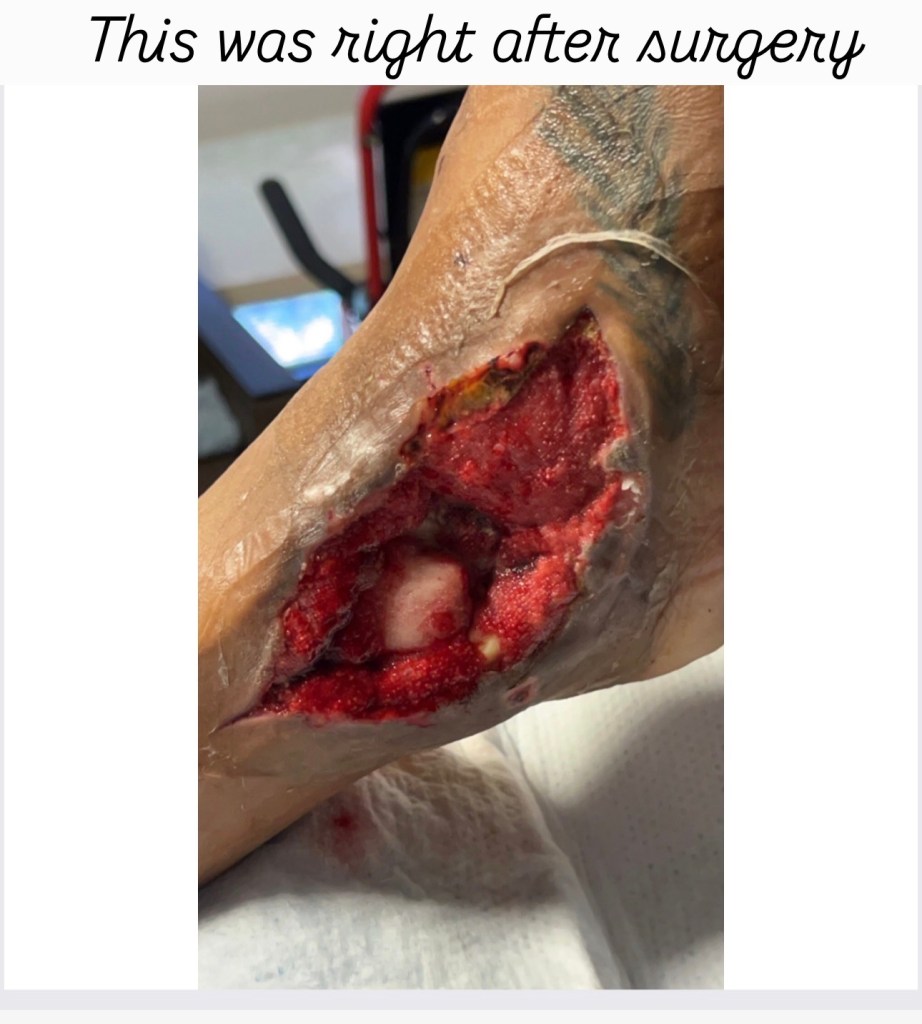
The pathology results confirmed what I feared the infection had spread into the bone. I was diagnosed with osteomyelitis, a serious and potentially devastating bone infection. Cultures identified MSSA (Methicillin-Sensitive Staphylococcus aureus), a type of staph bacteria that had infected my ankle and caused significant damage. The hospital placed an IV antibiotics PICC Line on my left side of my arm into my heart for two weeks when I was admitted to the hospital.
On June 6, 2024, I was discharged from the hospital with a six-week course of IV antibiotics in an effort to eliminate the infection and save my leg. While I was grateful to finally have answers, receiving a diagnosis of osteomyelitis was overwhelming. What had started as a work-related ankle injury had now become a serious bone infection requiring surgery, prolonged treatment, and an uncertain future.
Even after receiving the diagnosis, I was left with many unanswered questions. I struggled to understand how my condition had progressed to this point and whether earlier recognition of the infection, additional testing, or different interventions could have changed the outcome. I felt frustrated, scared, and uncertain about what the future would hold.
Looking back, I often wonder whether earlier diagnostic testing, closer monitoring, or more aggressive intervention could have identified the infection before it spread so extensively. While I cannot change what happened, I can share my experience in the hope that it encourages others to advocate for themselves, ask questions when something does not feel right, and seek second opinions when their symptoms are not improving.
My story is not just about infection, surgery, or amputation. It is about the importance of being heard as a patient, the value of timely diagnosis, and the need to continue searching for answers when your body tells you that something is wrong.
The Incompetent Podiatrist, Hospital & Wound Specialist
At the wound care from June 10, 2024, through July 15, 2024, I received home health services and PICC line infusion therapy to help manage my medical needs following my diagnosis of a serious staph infection and osteomyelitis. During this time, nurses regularly came to my home to monitor my condition, provide wound care, change dressings, and assist with the management of my PICC line.
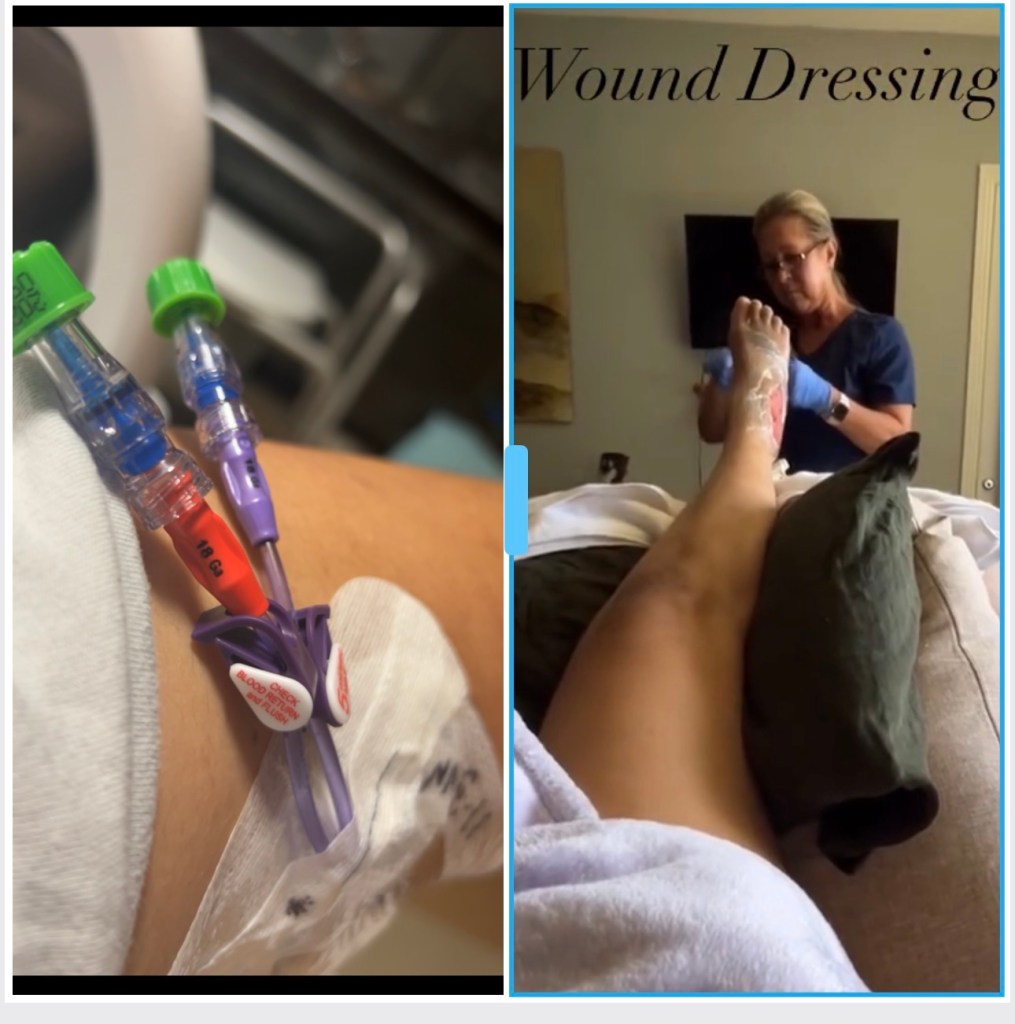
On July 15, 2024, I received treatment at Baywood Wound Clinic for a wound following my diagnosis of a staph infection and osteomyelitis. Despite ongoing symptoms and limited progress in the healing process, I do not recall receiving vascular testing or imaging studies to evaluate the underlying cause of my worsening condition.
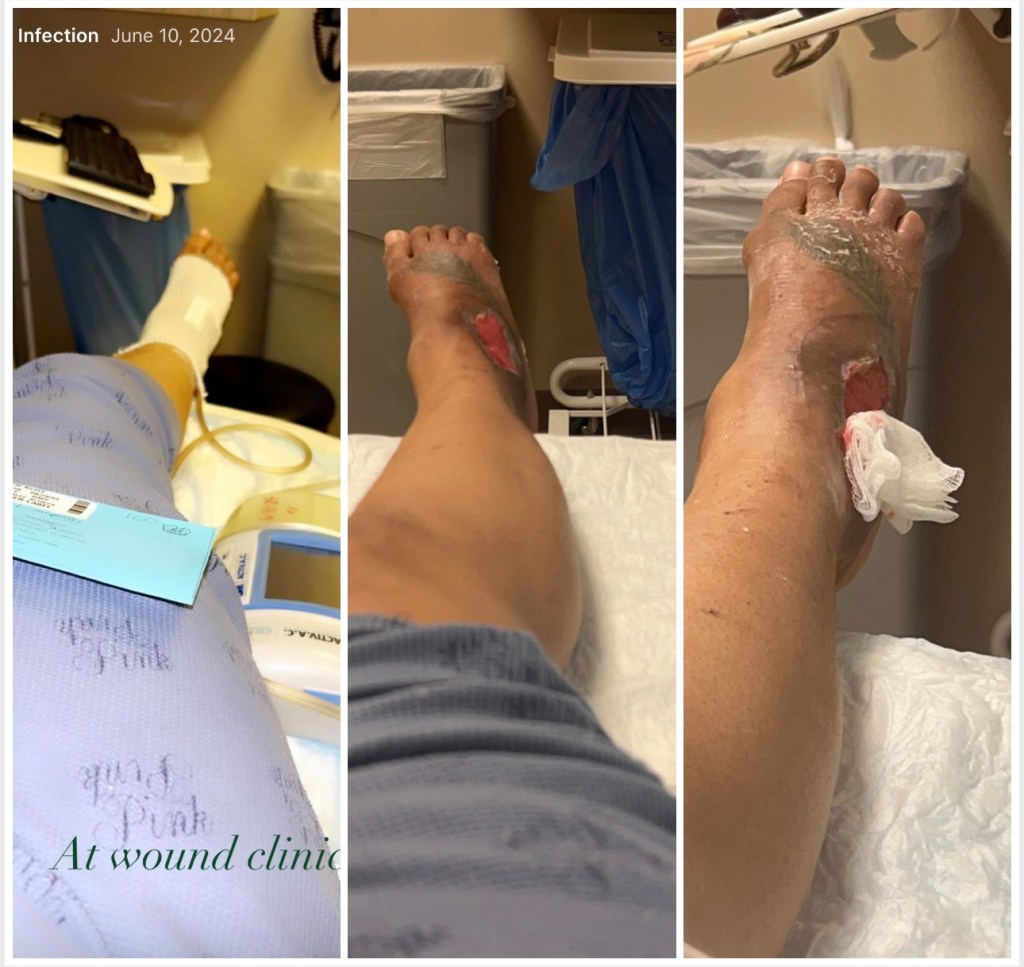
For approximately five months, I was treated in a total contact cast as part of my wound care treatment. Month after month, I continued attending weekly appointments while struggling with pain, swelling, and a wound that was taking much longer to heal than expected.
Each week, for 5 months the wound specialist would remove the cast, clean and evaluate the wound, apply medication, and place multiple layers of padding and protective dressings over my foot and ankle. A new cast would then be molded to my foot and leg using warm water. During these visits, efforts were also made to gradually improve the position of my ankle. When treatment began, my ankle was fixed at approximately 10 degrees, and over time the goal was to bring it closer to a 90-degree position to improve my ability to walk.
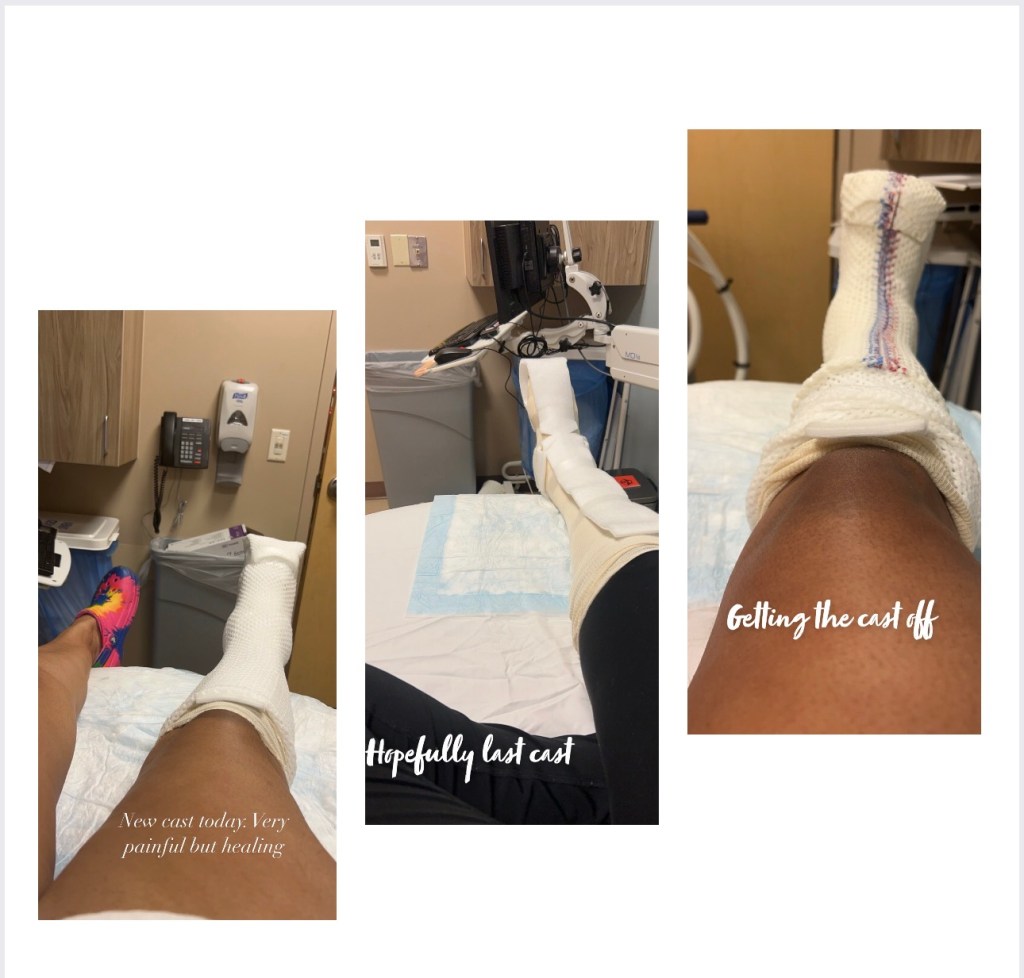
As a patient, I always asked can we do an x-ray or do I need more imaging and the wound specialist always said that it wasn’t needed.
In October 2024, once the wound was completed healed I found out I had severely compromised blood flow to my foot and ankle by having an MRI. By that point, significant tissue damage had already occurred, and my condition had become much more serious than anyone initially realized.
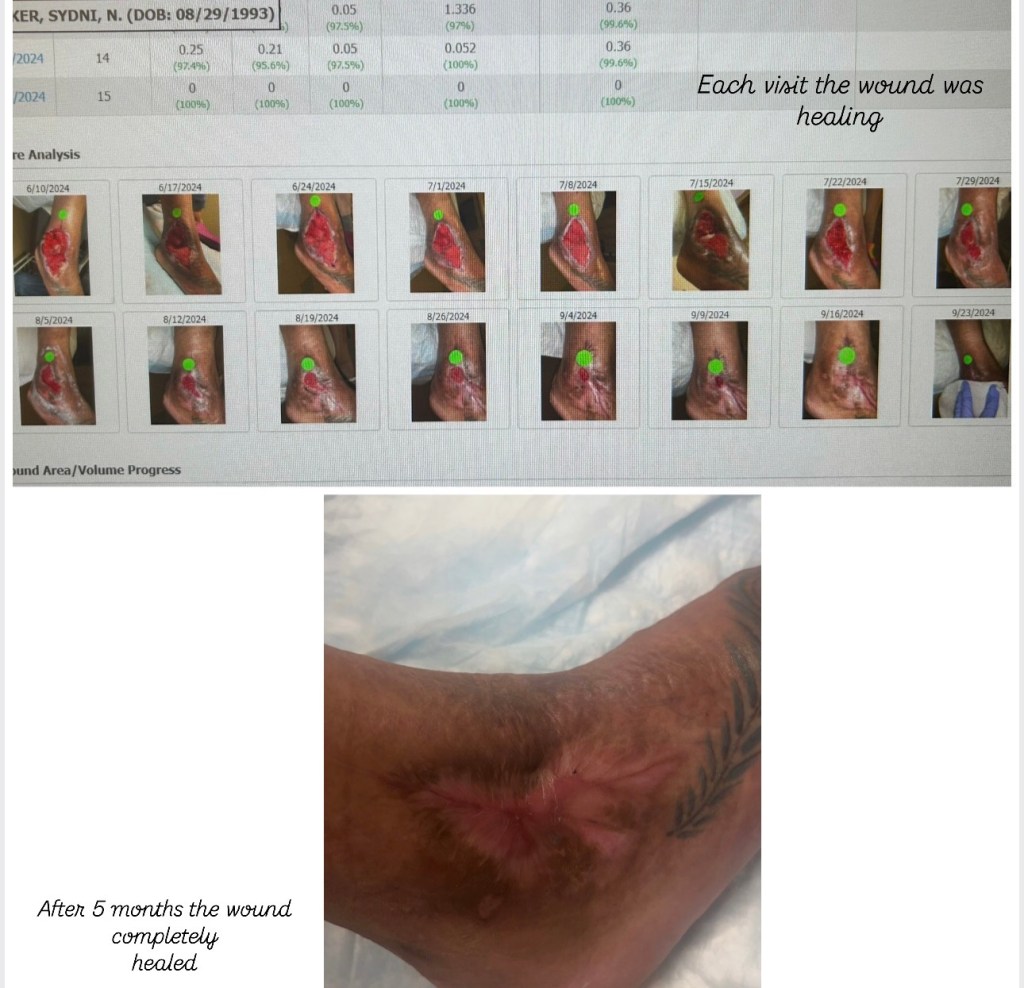
Learning that my ankle joint and ankle bone had deteriorated so severely, and that blood flow to my foot and ankle had been significantly compromised, was devastating. The MRI that revealed these findings provided answers that I had been searching for throughout my treatment.
One of the reasons this discovery was so difficult to process was that I had advocated for additional testing as my condition continued to worsen. I was ultimately able to obtain the MRI after expressing ongoing concerns and following recommendations from members of my treatment team. The results revealed the severity of the damage that had occurred within my ankle.
I continue to question whether earlier vascular testing, circulation studies, imaging, or referrals to vascular specialists could have identified problems sooner. I later learned that blood flow to my foot and ankle had become severely compromised. By the time the extent of the circulation issues was fully recognized, significant damage had already occurred.
I am sharing my story is to encourage patients with non-healing wounds to ask questions about blood flow, circulation, infection, and additional testing when their condition is not improving. A wound that is not healing may be a sign of a more serious underlying problem, and patients deserve a thorough evaluation to determine why.

