On May 19, 2024, I went to Banner University Medical Center seeking answers for my worsening symptoms. By that point, I was experiencing severe pain in my right ankle, significant swelling, redness, and difficulty bearing weight. Walking had become extremely difficult, and I knew something was seriously wrong.
While in the emergency department, three X-rays of my ankle were performed. I was informed that the findings were related to scar tissue and was advised to go home, ice my ankle, and continue monitoring my symptoms. However, I left the hospital feeling discouraged and concerned because my condition continued to worsen, and I still did not have answers for the pain, swelling, and loss of function I was experiencing.
Banner University Medical Center is known for treating complex medical conditions, including infectious diseases, and I believed I would receive the specialized care needed to determine why my condition was rapidly deteriorating.
After going to the Banner University Medical Center, I went to another ER Abrazo Central Campus due to the symptoms were unbearable and they performed a CT scan and the results said that I had bone fragments from the first surgery that were missed and they also said that I may possible have an infection. They recommended me to go back to my podiatrist.
On May 26, 2024, my surgical incision suddenly broke open, and the Phoenix Fire Department transported me by ambulance to Banner University Medical Center. By this point, my condition had deteriorated significantly, and I was frightened by how quickly things were worsening.
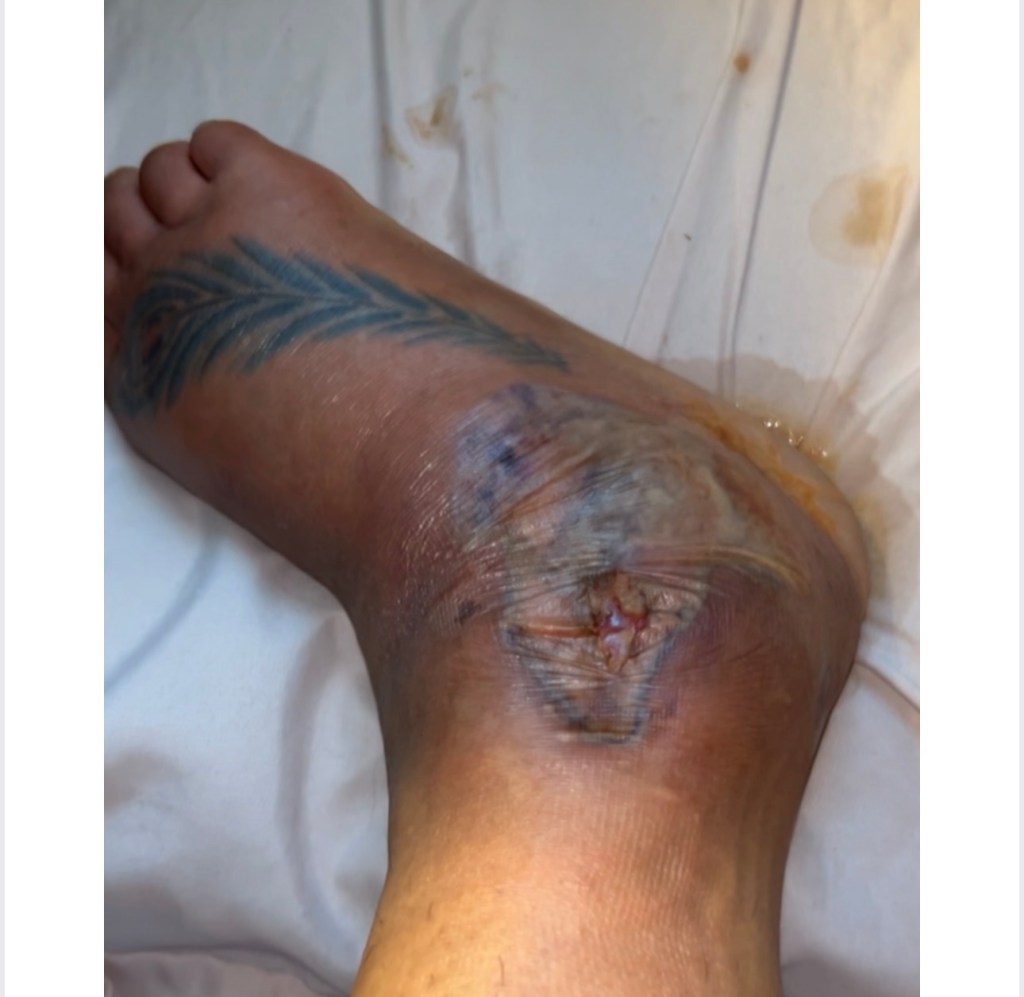
While in the emergency department, I was evaluated by a physician who expressed concern about the severity of my condition. I was told that it was a good thing I had returned to the hospital because there was now a significant risk that I could lose my leg if the infection continued to progress.
After spending most of the day in the hospital, blood cultures and additional testing were performed. The results revealed that I had developed a serious staph infection associated with my surgical incision. For the first time, I had an explanation for why my condition continued to worsen despite months of pain, swelling, wound complications, and unanswered questions.
Although it was devastating to learn that I had developed a serious infection, I also felt a sense of relief in finally having an answer. Unfortunately, the diagnosis came after the infection had already caused significant damage. What began as a work-related ankle injury had now progressed into a medical crisis that would require additional surgeries, prolonged antibiotic treatment, and an uncertain future.
I was informed that the hospital did not have a podiatrist or orthopedic surgeon available to provide the surgical treatment I required. As a result, arrangements were made for me to be medically transported to Banner Baywood Medical Center, where my podiatrist was waiting to evaluate me and perform a second ankle surgery.
On May 26, 2024, At Banner Baywood Medical Center, further testing, including an MRI, revealed findings concerning for a septic ankle joint and possible osteomyelitis, a serious bone infection. By that point, the infection had progressed beyond the incision and was affecting the structures within my ankle.
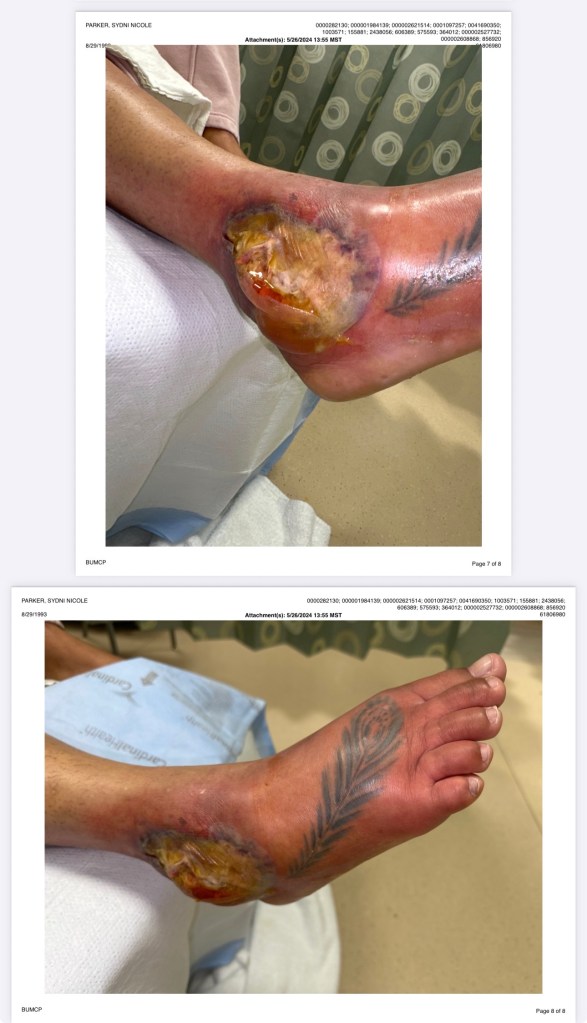
On May 28, 2024, I underwent an my 2nd ankle surgery debridement and irrigation procedure to remove infected tissue and attempt to control the infection. Following surgery, tissue samples were sent to pathology for evaluation.
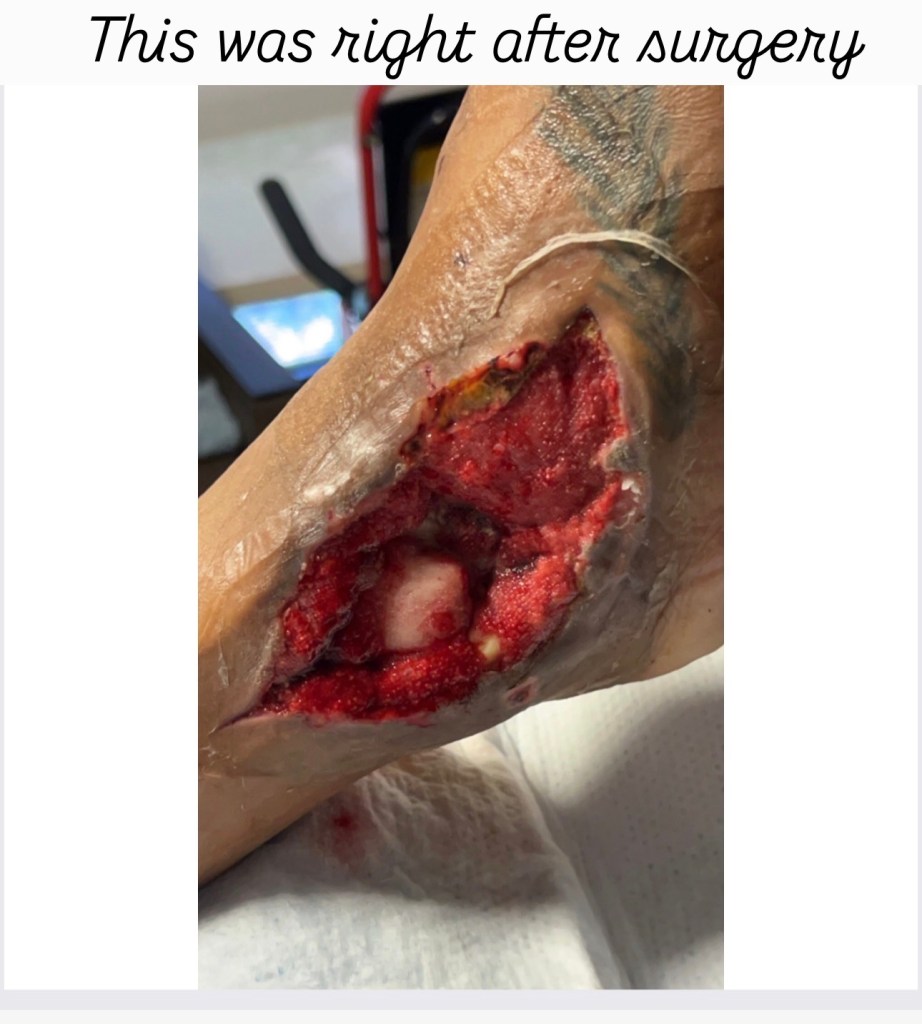
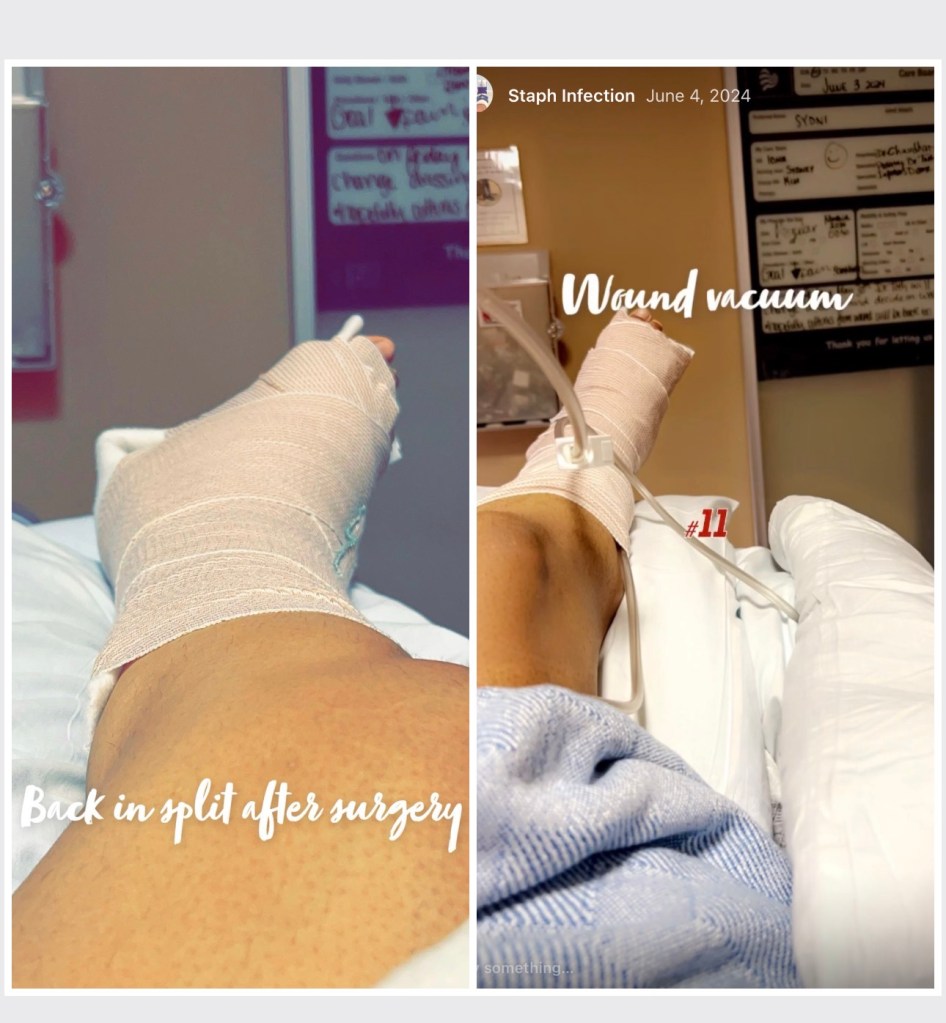
The pathology results confirmed what I feared the infection had spread into the bone. I was diagnosed with osteomyelitis, a serious and potentially devastating bone infection. Cultures identified MSSA (Methicillin-Sensitive Staphylococcus aureus), a type of staph bacteria that had infected my ankle and caused significant damage. The hospital placed an IV antibiotics PICC Line on my left side of my arm into my heart for two weeks when I was admitted to the hospital.
On June 6, 2024, I was discharged from the hospital with a six-week course of IV antibiotics in an effort to eliminate the infection and save my leg. While I was grateful to finally have answers, receiving a diagnosis of osteomyelitis was overwhelming. What had started as a work-related ankle injury had now become a serious bone infection requiring surgery, prolonged treatment, and an uncertain future.
Even after receiving the diagnosis, I was left with many unanswered questions. I struggled to understand how my condition had progressed to this point and whether earlier recognition of the infection, additional testing, or different interventions could have changed the outcome. I felt frustrated, scared, and uncertain about what the future would hold.
Looking back, I often wonder whether earlier diagnostic testing, closer monitoring, or more aggressive intervention could have identified the infection before it spread so extensively. While I cannot change what happened, I can share my experience in the hope that it encourages others to advocate for themselves, ask questions when something does not feel right, and seek second opinions when their symptoms are not improving.
My story is not just about infection, surgery, or amputation. It is about the importance of being heard as a patient, the value of timely diagnosis, and the need to continue searching for answers when your body tells you that something is wrong.
 My Journey Becoming an RBK Amputee